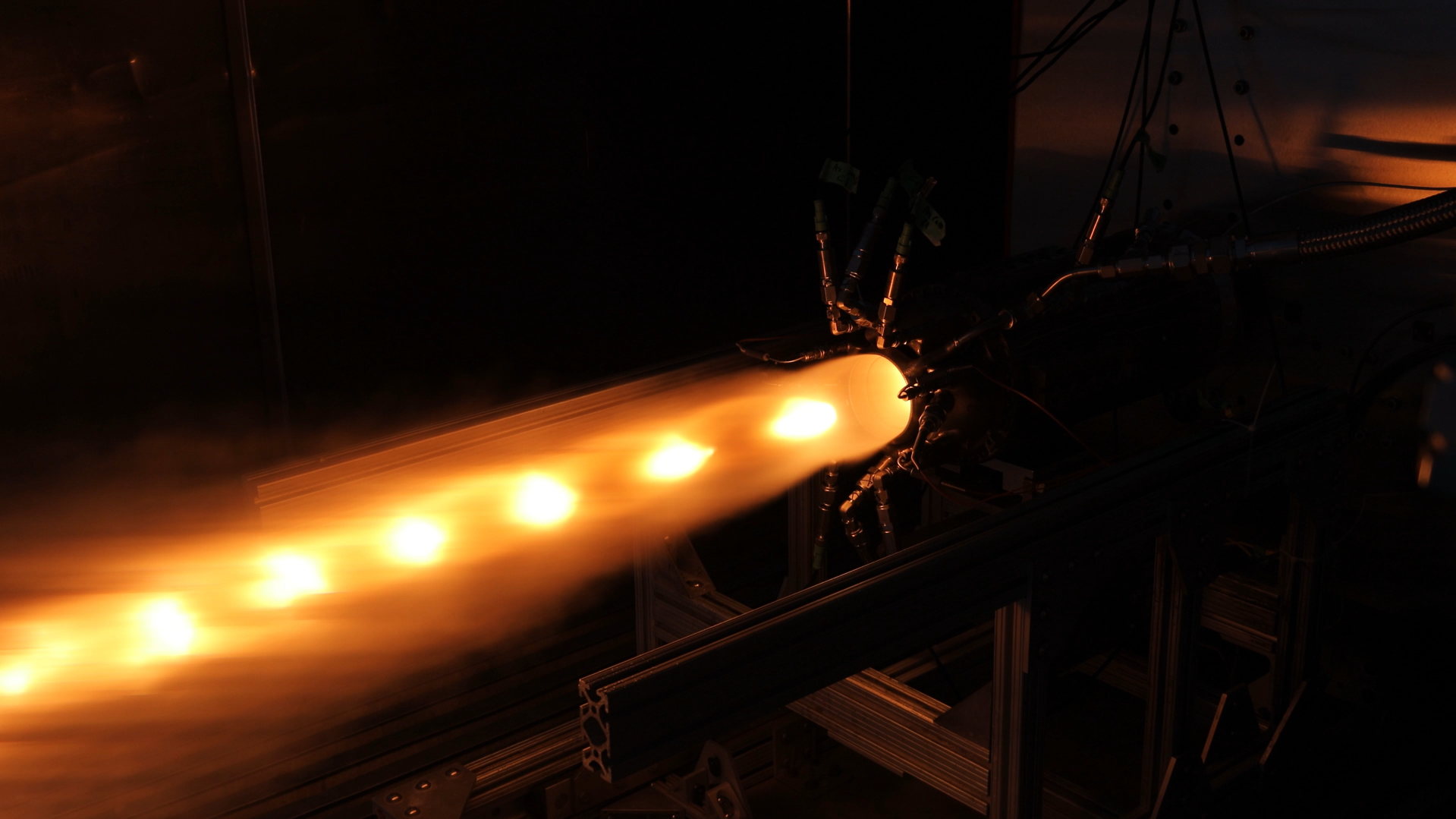
Responsive Launch: Turning Space Power Into Space Control
Space has never been more strategically important. As governments and commercial operators race to deploy larger constellations, navigate contested orbits, and respond to increasingly agile competitors, the question is no longer whether Canada needs access to space, but whether we can access it when it matters most.
It has been one week since Space Bound 2025, and the Government of Canada has officially issued a landmark announcement: an open IDEaS Challenge for a dedicated and responsive domestic launch program, right here in Canada.
It’s a long-awaited move, and a critical signal that sovereignty in space is now understood as an operational requirement, not a distant aspiration.
But the true story here isn’t just sovereign launch.
It’s responsive launch: stockpiled, distributed, on-demand.
What is Responsive Launch?
Responsive launch goes beyond the ability to put payloads into orbit. It is the capability to:
Deploy satellites on short notice
Replace disabled or lost space assets
Regenerate mission-critical capability after disruption
Adapt to emerging threats and opportunities in real time
Support defence, civil, and commercial missions with rapid cadence
In a world where space infrastructure underpins everything from communications to intelligence collection and humanitarian response, responsiveness becomes the difference between space power and space control.
Traditional launch systems were never designed for this mission. They are optimized for large payloads, long planning cycles, and multi-year manifest queues. Responsive launch demands the opposite: agility, speed, flexibility, and concealment.
Canada’s Vulnerability: Dependent, Scheduled, and Externally Prioritized
Canada’s existing launch access, world-class as it is, remains entirely dependent on foreign systems, foreign manifest priorities, and foreign timelines. For critical payloads, we wait in line. For urgent payloads, we ask.
In today’s strategic environment, that isn’t sustainable.
Whether supporting Arctic surveillance, wildfire detection, maritime domain awareness, secure communications, defence R&D, or commercial technology cycles, Canada’s future advantage hinges on timely, reliable access to orbit.
Simply put:
If you cannot launch on your own terms, you cannot secure your sovereign capabilities in-orbit.
Responsive Launch as an Enabler, Not an End State
Responsive launch is foundational. It enables:
1. Sovereign Capability - The ability to generate, deploy, and replenish capability without external permission or delay.
2. Strategic Deterrence - A state that can rapidly regenerate space assets is far harder to neutralize.
3. Innovation Velocity - Universities, startups, defence labs, and commercial operators can test, iterate, and deploy far faster.
4. Critical Infrastructure Protection - Canada’s economy, including energy, banking, transportation, and communications, relies on orbital infrastructure whose resilience depends on our ability to replace or upgrade it.
5. Defence Readiness - Mission data, tactical communications, ISR, and emerging quantum-enabled space systems require reliable launch timelines measured in days to weeks, not months to years.
Responsive launch, in other words, is the base layer on which all other sovereign space capabilities depend.
Why Today’s IDEaS Launch Challenge Matters
The Space Bound 2025 announcement isn’t just another federal initiative. It is the first formal government recognition that launch capability must be built inside Canada; with Canadian engines, Canadian infrastructure, and Canadian readiness.
This is a generational inflection point.
It creates:
A pathway for operationally relevant demonstrations
A mechanism to fund early sovereign capability
A clear mandate for industry to mobilize
A foundation upon which an entire domestic launch ecosystem can stand
Most importantly, it ties launch directly to national security outcomes. That alignment has been long overdue.
How Canada Can Leapfrog Traditional Models
The United States has already recognized this shift, investing heavily in Tactically Responsive Space (TacRS) through the U.S. Space Force and rapid-launch demonstration missions. But the American model is constrained by legacy infrastructure and fixed-range systems built for another era.
Canada, by contrast, has the opportunity to leapfrog:
To build a distributed, flexible, mobile, and low-footprint sovereign launch architecture from day one. Rather than replicating older systems, we can design a capability aligned with where the world is going: containerized, rapidly deployable, and unconstrained by traditional launch-range bottlenecks.
Canada’s Next Step: Build for Responsive & Distributed Posture, Not Just Capacity
Sovereign access should not mean “launch when we can.”
It must mean launch when we choose.
That requires:
Containerized, mobile, and quickly deployable launch systems
Green propellants compatible with federal safety and environmental standards
Modular ground infrastructure scalable across multiple provinces
Hybrid propulsion that enables stored, on-demand readiness
A domestic supply chain resilient to global shocks
Countries that master responsive launch will control their strategic future in orbit. Those that don’t will depend on the timelines, priorities, and foreign policy of others.
Canada now faces a choice:
Build an agile sovereign capability or accept permanent dependence.
The IDEaS announcement shows we are choosing the former.
The Window of Opportunity Is Open
Responsive launch is not merely a technology.
It is a strategic posture, a national advantage, and an economic catalyst.
Canada has the talent, the technology, and now, for the first time, the policy signal needed to lead.
This is the threshold.
Cross it, and Canada enters the era of active space control.
Hesitate, and we remain dependent in a domain that defines national power.
Sgt. Jesse Mikelberg (Ret.), MBA, M.Sc